
ZDrauA Information Portal
The ZDrauA Information Portal is being developed as a shared digital environment for integrating environmental data collected in the Drava/Drau River basin.
The platform will connect sampling locations and events with samples, laboratory processing, sequencing, bioinformatic analyses, species observations, chemical measurements, environmental-risk assessments and GIS-based visualisation. Its purpose is to improve data traceability, comparability and access across the project.
Conceptual platform architecture
The current conceptual model represents the principal relationships between field sampling, laboratory and analytical workflows, environmental results and geographic information. The final platform structure and functions will be refined during implementation and user testing.
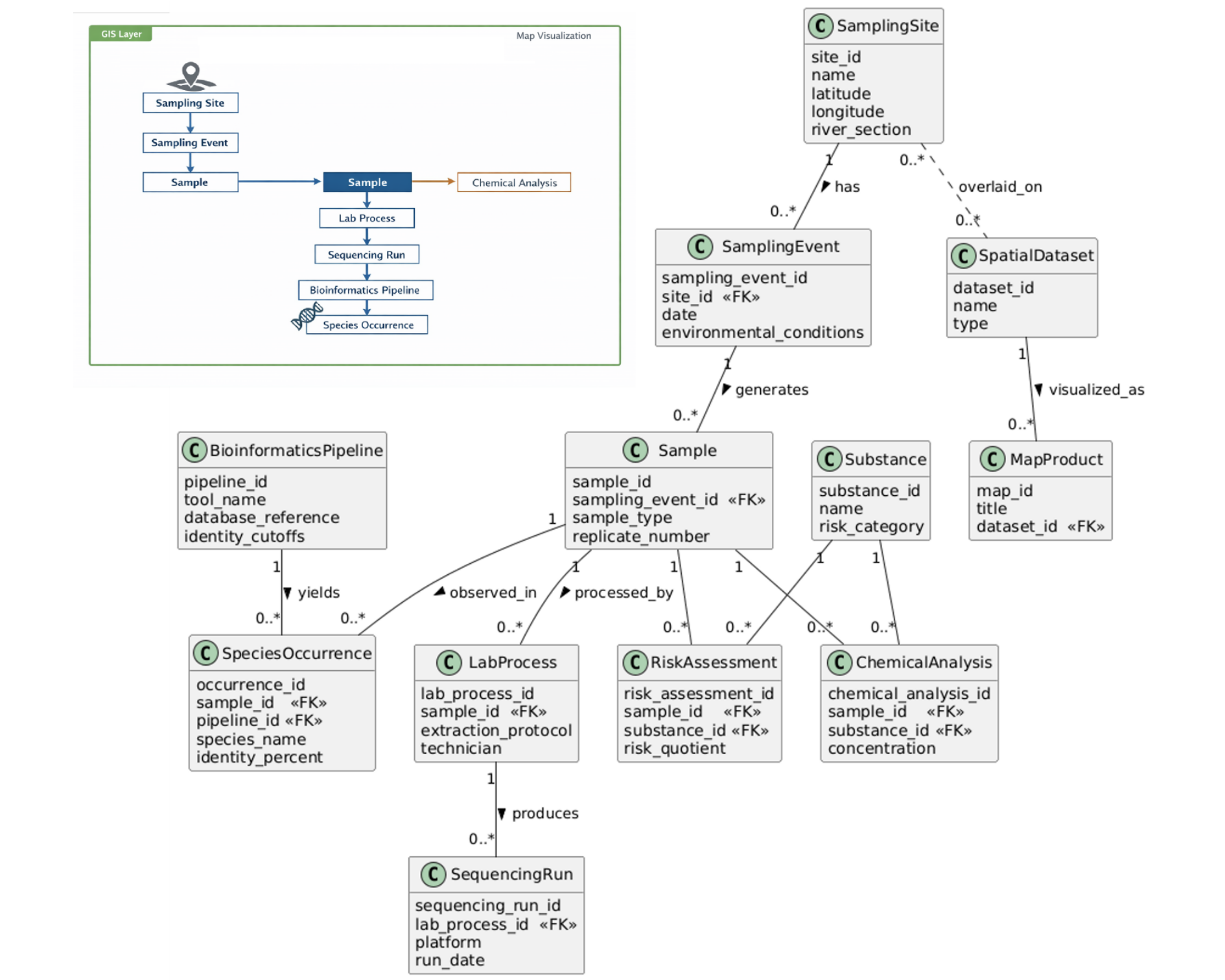
Simplified core architecture of the ZDrauA Information Portal:
The diagram illustrates how sampling sites, sampling events and samples are connected with laboratory processes, sequencing, bioinformatic pipelines, species observations, chemical analyses, environmental-risk assessments and GIS map products.
User needs guiding platform development
The platform concept is based on requirements identified by project participants representing the main operational roles involved in environmental monitoring.
| User role | Main requirements | Current challenge |
|---|---|---|
| Sample collectors | Standardised metadata, GPS traceability and storage documentation | Fragmented metadata formats |
| Laboratory technicians | Links between samples, protocols, extraction data and quality controls | Separation of field and laboratory data |
| Data analysts | Transparent documentation of bioinformatic workflows | Limited reproducibility |
| Risk assessors | Harmonised analytical data, quality indicators and export tools | Difficult comparison between datasets |
| GIS experts | Structured geodatabase and interactive visualisation | Integration of heterogeneous data |
The portal will be expanded progressively as project workflows, datasets and user requirements are further developed and validated.