How ZDrauA monitors the Drava/Drau River
The ZDrauA project combines established environmental monitoring approaches with next-generation molecular, microbiological, chemical, and geospatial methods.
Our aim is to improve how biodiversity, antimicrobial resistance, viral indicators, chemical pollutants, and ecological conditions are detected, compared, and interpreted across the Drava/Drau River basin.
No single method can provide a complete picture of river health. ZDrauA therefore connects information collected in the field with laboratory analyses, bioinformatic processing, chemical measurements, environmental risk assessment, quality control, and GIS-based visualisation.
Together, these methods help us answer five central questions:
Which organisms are present in the river?
Which microbial and chemical pressures can be detected?
How do conditions differ among locations and sampling periods?
How reliable and complete are the available results?
How can the findings support environmental monitoring and river management?
The methods presented on this website are being reviewed, harmonised, tested, and refined by project partners in Austria and Slovenia. Where relevant, we distinguish between established procedures, adapted methods, pilot approaches, and methods that are still undergoing validation.
Environmental DNA and DNA metabarcoding
ZDrauA uses environmental DNA, or eDNA, and DNA metabarcoding to investigate biodiversity in the Drava/Drau River basin.
Genetic material is obtained from filtered water or collected biological samples, extracted in the laboratory, amplified, and sequenced. The resulting DNA sequences are quality-filtered, grouped, and compared with reference databases such as BOLD Systems and NCBI.
This process supports taxonomic identification and the preparation of biodiversity data for further analysis and spatial visualisation.
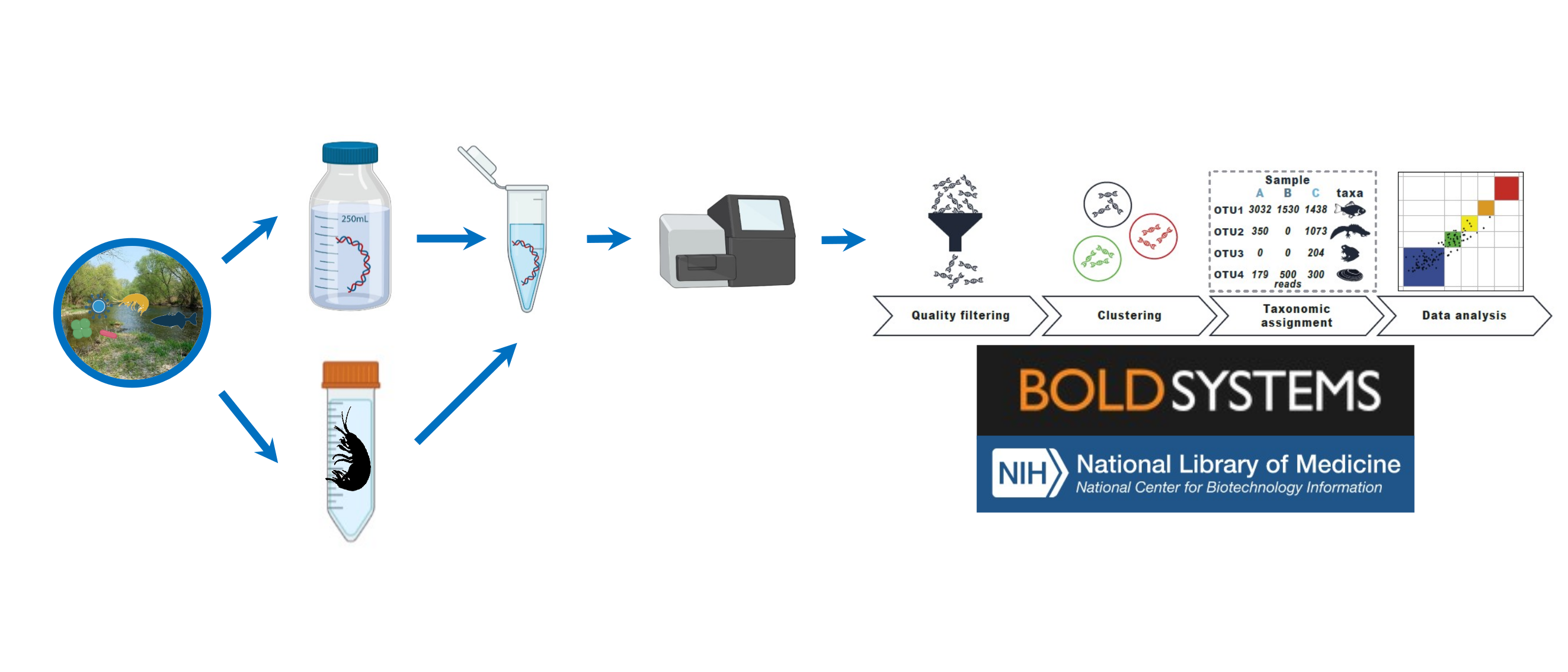
Simplified workflow for DNA-based biodiversity analysis, from environmental or bulk sampling to sequencing, bioinformatic processing, taxonomic assignment, and data analysis.